NewsHail
23 May 2025
The man who put up white crosses in South Africa said President Trump was wrong to call it a "burial site."
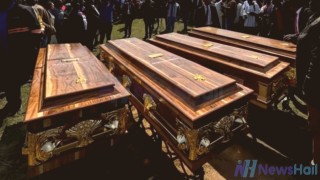
Rob Hoatson said the crosses were set up by the road in KwaZulu-Natal as a memorial for a couple who died on their farm in 2020.
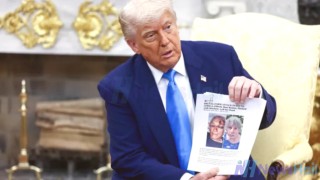
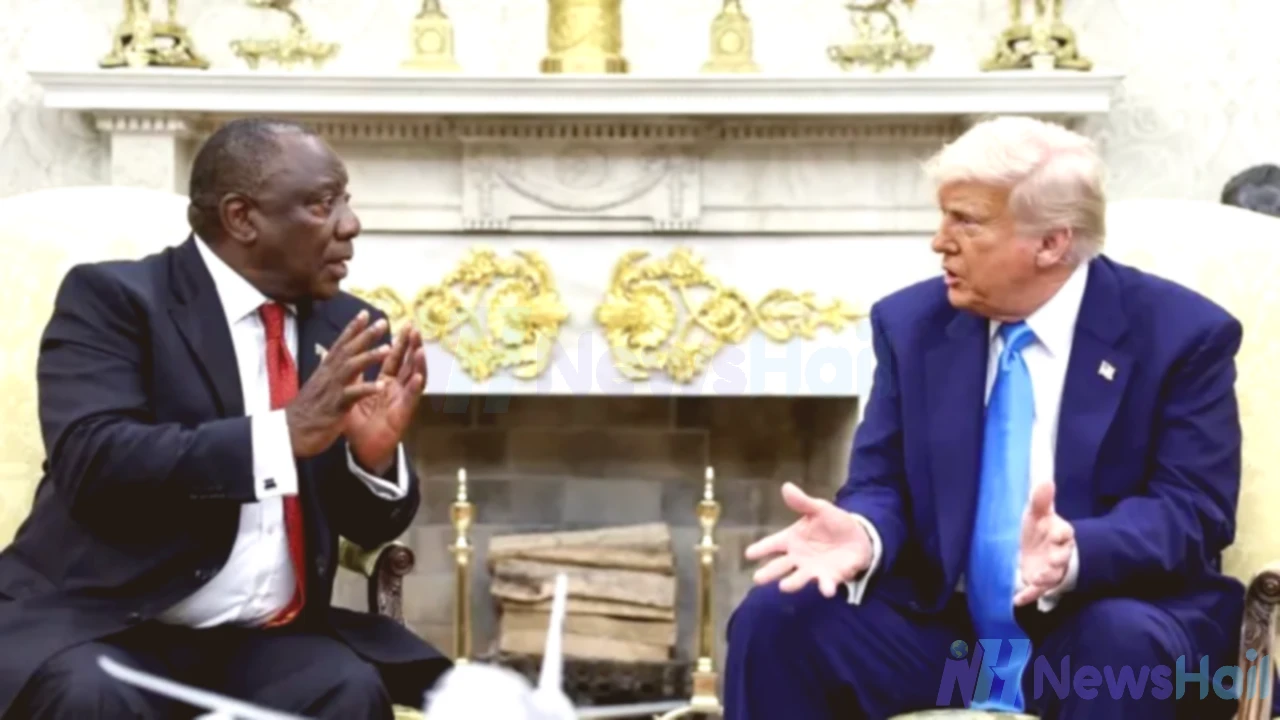
At a meeting in the White House, Trump showed a video of the crosses to South Africa's president, Cyril Ramaphosa. Trump used it to say white farmers were being attacked.
Ramaphosa said there was violence in South Africa. But he said white farmers were not being killed on purpose.
Trump said, "These are burial sites… over 1,000 white farmers. The cars are stopped there to pay respect to their family."
Mr. Hoatson, a 46-year-old farmer, said he did not mind the video being shown without his permission. But he said Trump often "exaggerates." He wanted to set the facts right.
He said, "It is not a burial site. It is a memorial. It was a temporary memorial, not a permanent one."
The crosses were for Glen and Vida Rafferty, aged 63 and 60. They lived nearby and were killed on their farm in August 2020.
Two men were found guilty of their murder in 2022.
The memorial had more than 2,500 white crosses along both sides of the road near the farm. It has been taken down now.
Mr. Hoatson said, "The main issue is not if it is a burial site or memorial. The murders of white farmers are wrong and not needed."
He said about Trump’s meeting with Ramaphosa, "Trump gave the facts and asked Ramaphosa to answer. But the answer was weak. Ramaphosa said he never saw or heard of this, but I don’t believe that."
In the Oval Office, Ramaphosa said there is crime in South Africa. He added, "People killed by crime are not only white; most are black."
South Africa does not share crime numbers by race. But from October to December 2024, about 10,000 people were killed.
Twelve were killed in farm attacks. One was a farmer, five were farm dwellers, and four were workers who are likely black.
Some Afrikaner groups liked Trump’s comments. They said it helped bring the farm attacks to the world’s attention.
But a well-known Afrikaner writer, Pieter du Toit, said this came from "many years of exaggeration and wrong information shared by some South African activists with the American right-wing."