NewsHail
01 Jun 2025
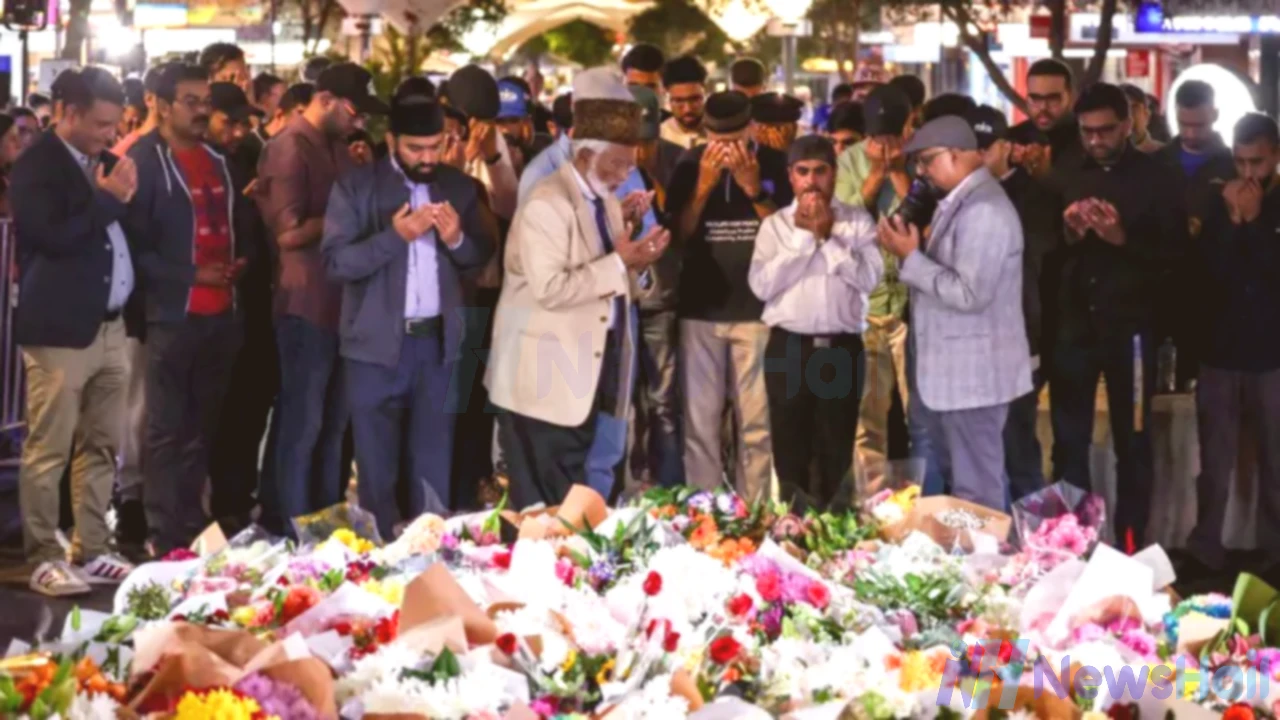
Many people look forward to Saturdays. They relax and spend time with family and friends. But Elizabeth Young "dreads" Saturdays. Every week, they remind her of her daughter Jade’s violent murder at Westfield Bondi Junction.
Elizabeth told an inquiry this week, "On a nice autumn afternoon, to learn your daughter is dead, stabbed in broad daylight, killed while shoppers were around... she was alive just an hour ago... it feels like a nightmare, like a different world."
She said, "The moment the attacker stabbed Jade, our normal lives were broken."
Families of other victims shared their pain too on the last day of a five-week inquest about the deadly stabbings on April 13 last year.
The inquiry wanted to know how a 40-year-old man from Queensland, who had many mental health problems, could walk into a busy shopping centre in Sydney and kill six people. He also hurt 10 others, including a nine-month-old baby.
The court heard many witnesses talk — doctors, survivors, families, and police. They tried to find out how Australia can stop such a tragedy from happening again.
Elizabeth said to the court, "It feels like my daughter and five others were killed because many people in many systems failed them."
The stabbings shocked the nation. It was a bright, clear afternoon and the first day of school holidays. Joel Cauchi walked into the big shopping centre near Bondi Beach.
Just before 3:33 pm, Cauchi took a 30cm knife from his bag and stabbed Dawn Singleton, 25, killing her.
Within three minutes, he had stabbed five more people to death — Yixuan Cheng, 27; Jade Young, 47; Ashlee Good, 38; Faraz Tahir, 30; and Pikria Darchia, 55. He also hurt 10 others, including a baby.
At 3:38 pm, five minutes after he started, police officer Amy Scott shot Cauchi dead. She was nearby and arrived quickly.
After the attack, Cauchi’s parents saw him on TV and called police to tell them about his long mental health struggles.
Jade’s family saw TV videos showing her lifeless body. Julie Singleton, Dawn’s mother, heard her daughter’s name on the radio before the family was told.
The attack caused shock and fear across Australia. Mass murder is rare here. Most victims were women — 14 out of 16, and five of the six who died.
The inquest looked at Cauchi’s many contacts with police and mental health workers before the attack.
Cauchi was once a bright young man. He went to a private school on a scholarship and was top of his class at university.
At 17, he was diagnosed with schizophrenia and started medicine.
After years of treatment, in 2018, his doctor stopped his main medicine without a second opinion. By 2019, he was on no medicine for schizophrenia.
His mother was worried when he said he felt “under satanic control.” He also got obsessed with porn. His doctor gave him a prescription but left it to him to take the medicine or not.
In 2020, Cauchi moved to Brisbane and stopped seeing his doctor. He had no regular psychiatrist or medicine and no family nearby.
He tried to get a gun licence, visiting doctors for a medical note. Some doctors did not ask for his full records. One doctor gave the note, but Cauchi never applied for a gun.
Cauchi also had police contacts for erratic driving and strange behavior. Police once went to his home after neighbors heard screaming but left because he was not seen as a risk.
His mother told police he should be on medicine. Police asked mental health workers to check on him, but the request was missed because of low staff.
By 2024, Cauchi was homeless and alone.
The inquest found Cauchi was "floridly psychotic" during the attack. Some doctors said his old psychiatrist missed chances to put him back on medicine.
The doctor said she did not fail Cauchi’s care and believed he was not psychotic when he attacked. She said the attack might be due to “sexual frustration and hatred of women,” but later said she was guessing.
The inquest also asked if Cauchi picked his victims. Jade’s brother said Cauchi was angry for not finding a "nice" girl to marry, and most victims were women. Police said it was clear Cauchi focused on women, but detectives said there was no proof he targeted women specifically.
There were other problems. The shopping centre’s security was weak. When the first attack happened, the control room was empty because the operator was on a break.
Faraz Tahir, a security guard and the only male victim, was killed trying to stop Cauchi on his first day at work. His brother called him a hero. The security company has since improved training and given guards stab-proof vests.
Families also criticized the media for the way they reported the attack. They want better rules to avoid more pain for victims' families.
The inquest paused on Thursday. The state coroner will give recommendations by the end of the year.
The coroner said the hearings are not about blaming people, but about finding ways to stop such events in the future.
Elizabeth said the inquest would not help her. At 74, she feels lost without her daughter.
She said Australia needs to face the truth: her daughter was killed by a man with untreated schizophrenia who had knives made for killing.
She called it a cry for help about how Australia neglects mental health.