NewsHail
23 May 2025
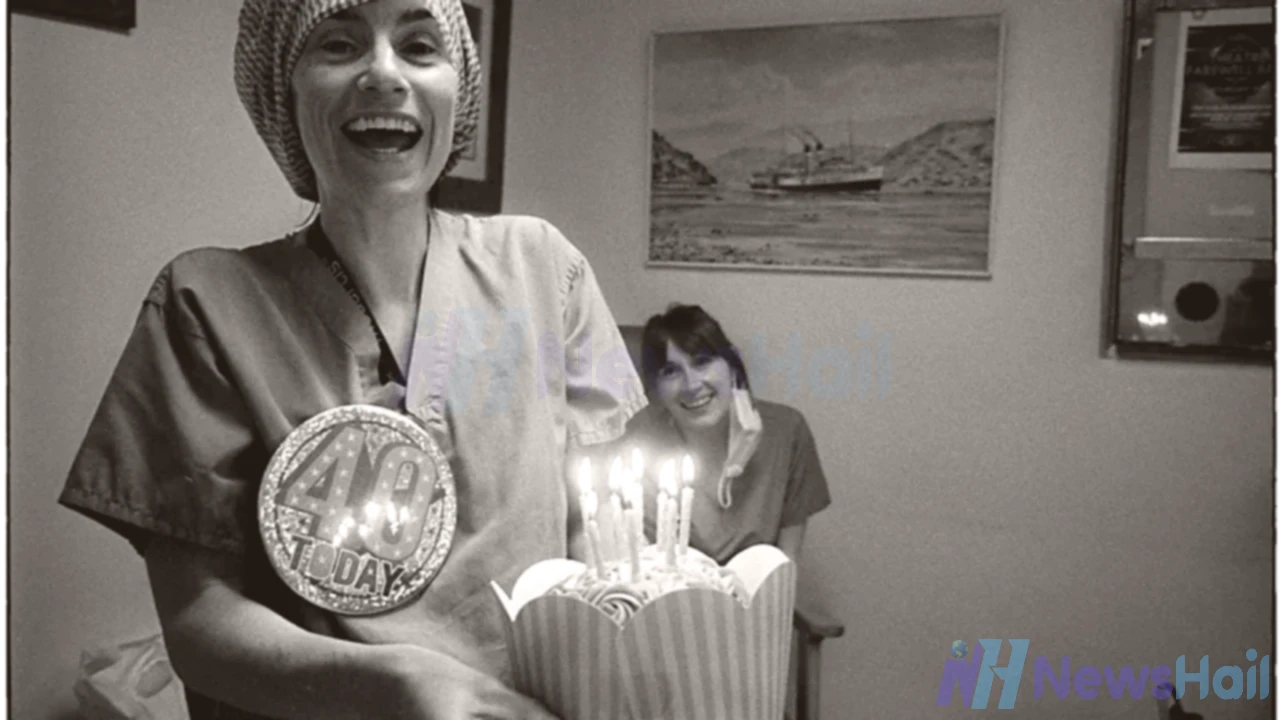
On May 6, 2020, a special picture appeared in The Guardian, a British newspaper.
The picture showed a woman in hospital clothes laughing as she was given a birthday cake. Behind her, another woman was laughing too. The light seemed to come mostly from the candles on the cake.
The picture was different from most in The Guardian. It was black and white. It looked grainy, like it was taken on film, not a digital camera. It was not taken by a news photographer but by a health worker joining the birthday fun. This was during the first wave of the Covid-19 pandemic.
David Collyer took this picture in early 2020. He works as an operating department practitioner (like a surgical nurse) at Nevill Hall Hospital in Abergavenny, Wales. When Covid-19 cases started flooding the hospital, he decided to document what he and his co-workers were going through. He used a small 35mm film camera.
Collyer had thought about a project to document the hospital staff’s daily life. "The Trust I worked for had built a new hospital during Covid," he said. "I wanted to document the last years of Nevill Hall. Then Covid happened. That made me start the project."
Collyer first heard about the coming pandemic when he saw news from Italy. "That was the real eye opener," he said. "We knew something was coming. Then the news started on the TV at night."
As experts warned the UK about Covid-19, the hospital made plans. "We stopped non-urgent surgeries and only did emergencies," Collyer said. "There was a quiet time when we didn’t know what was next. It was like a tsunami coming. We could see it, but didn’t know when it would hit."
The hospital set up an Intensive Therapy Unit (ITU) for Covid patients. Soon, more and more patients arrived. "Every patient was treated as if they had Covid," Collyer said. Staff had to wear full protective gear and air the rooms every 20 minutes.
Collyer took his camera, an old small Olympus XA3, on every shift for about two months. The camera was tiny and quiet. He did not use a flash, which gave the photos a grainy look.
He did not take pictures of patients to keep their privacy and because many photos of patients were already being shared worldwide. Instead, he focused on hospital staff. He showed them resting between cases, tired faces, and sitting down after long shifts. One photo showed a nurse tying back a colleague’s hair; another showed a worn-out worker in full gear resting against a wall. These were moments of calm in a hard time.
"If I had used a big camera and put it in people’s faces, they would act differently," Collyer said. "My small camera let me catch real moments."
The Guardian showed a photo essay of his work. One photo showed a nurse named Lauri celebrating her 40th birthday at work. "She chose to work that day during the crisis," Collyer said. He said NHS teams find joy in hard times. "To get through Covid, you need moments of happiness together. That photo shows that. Without those moments, you can’t handle what you see every day."
Collyer said the photos also show the feeling of being stuck. "It felt claustrophobic," he said. "Not just because of the protective gear, but because you spent so much time in the hospital. You had to shower and clean yourself after every case. It was tough."
He also saw many patients die and heard of NHS workers dying too. "A friend lost five colleagues," Collyer said.
He wanted to show how the team worked together in stress. "I didn’t want photos of patients, but of how the team stayed strong in a hard time," he said. "You need a strong stomach and dark humor to work in theatres. You find moments of joy even in dark times. That’s what I wanted to capture."
Collyer’s photos became a book, All in a Day’s Work, which helped raise money for mental health charities. In 2021, he won the Royal Photographic Society’s documentary photographer of the year award. But soon after, he was diagnosed with prostate cancer. He has since recovered.
"Suddenly, I was the patient," he said. "I was shielded in a private hospital to protect me from Covid. After surgery, I got scared because I had a fever and shivered. I was afraid I’d have to go back to the hospital."