
NewsHail
23 May 2025
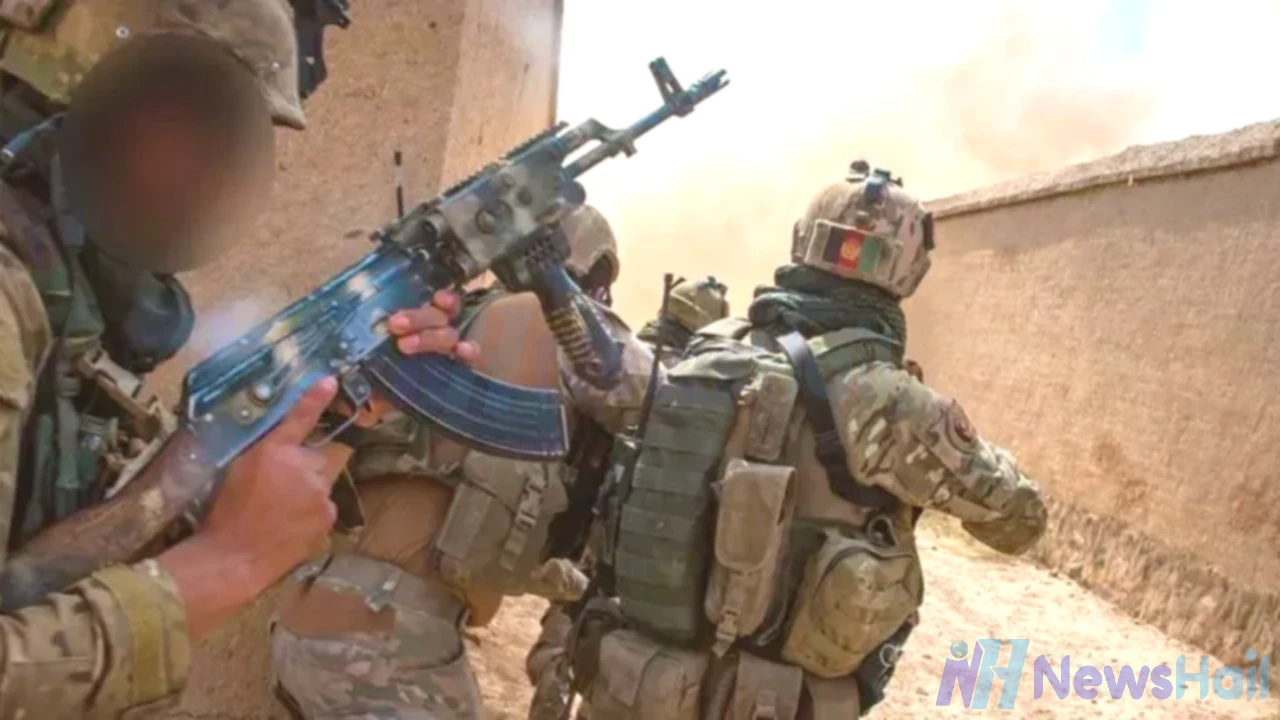
A UK Special Forces (UKSF) officer turned down 1,585 resettlement requests from Afghans who had worked with British commandos. This happened in the summer of 2023. The officer said "no" to every case sent to him during this time, which the Ministry of Defence (MoD) called a "sprint".
The MoD said this officer may be linked to an investigation into war crimes by the SAS.
Last week, the BBC said this officer had worked in Afghanistan. He rejected requests from Afghans who might have seen those alleged crimes.
These Afghan commandos, called the Triples, helped the SAS and SBS for years. When the Taliban took control in 2021, these men were at great risk.
Thousands of Afghans applied to move to the UK. Many had strong links to the Triples. But most of their applications were denied.
These rejections happened just as a UK public inquiry started looking into war crimes by British forces. The Triples had been present at the time. If they were in the UK, they could speak at the inquiry. But if they stayed overseas, the inquiry could not force them to talk.
The MoD knew about problems with the process as early as October 2022. New documents show staff worried that UKSF was unfairly rejecting anyone tied to the Triples.
Natalie Moore, who leads the UK’s Afghan resettlement team, shared a statement in court. She said it seemed like UKSF was rejecting Triples cases automatically. This looked like a hidden rule against them.
In January 2024, after the BBC’s report, Veterans Minister Johnny Mercer warned other ministers. He said giving UKSF the power to decide these cases was a clear conflict of interest. Some of the Afghans turned down were possible witnesses to war crimes. Mercer called this "deeply wrong".
He also said he had seen proof that five Triples were killed by the Taliban after being rejected. One of them had even spoken out against UKSF about killings in Afghanistan.
Despite early warnings, in March 2024 the MoD told the BBC and Parliament that UKSF had no veto. That was not true.
The Triples were called CF 333 and ATF 444. They were trained and paid by UKSF. When the Taliban took over, they were in serious danger and had the right to ask for UK help.
More than 2,000 applications that seemed strong were rejected by UKSF. Later, the MoD said these decisions were not solid and started a review.
This week, Armed Forces Minister Luke Pollard said the review would grow to look at 2,500 more cases that might have been wrongly rejected.
Some rejected Triples have been tortured and killed by the Taliban, say family, lawyers, and old teammates.
Court documents show that the government ran two probes into what UKSF did and the possible conflict of interest. One probe, called Operation X, said it found no secret plan or mass rejections. But it gave no real proof.
It blamed "sloppy checks" and poor work by the UKSF officer in charge. Over 600 of the rejected cases have now been accepted.
BBC’s Panorama said General Jenkins, who led UKSF at the time, was in charge of these rejections. He was just promoted to head of the Royal Navy. But the MoD said Jenkins was not involved and did not pick the officer who made the decisions.
Lawyer Tom de la Mare, working for a rejected Triple, said the MoD broke its duty to be honest. He said it did not share key proof and gave misleading answers.
The MoD’s lawyer, Cathryn McGahey, admitted the answers were wrong and said sorry in court. But she also said that just because the process could have been better, it doesn’t mean it broke the law.
Lawyer Daniel Carey, who helps one of the Triples, said his client had been asking the MoD to fix this for years. Many Triples were hurt or killed while waiting. Carey said the MoD finally agreed to tell all applicants if their case is under review. But he said it should not have taken a court case to get basic fairness.


