NewsHail
25 May 2025
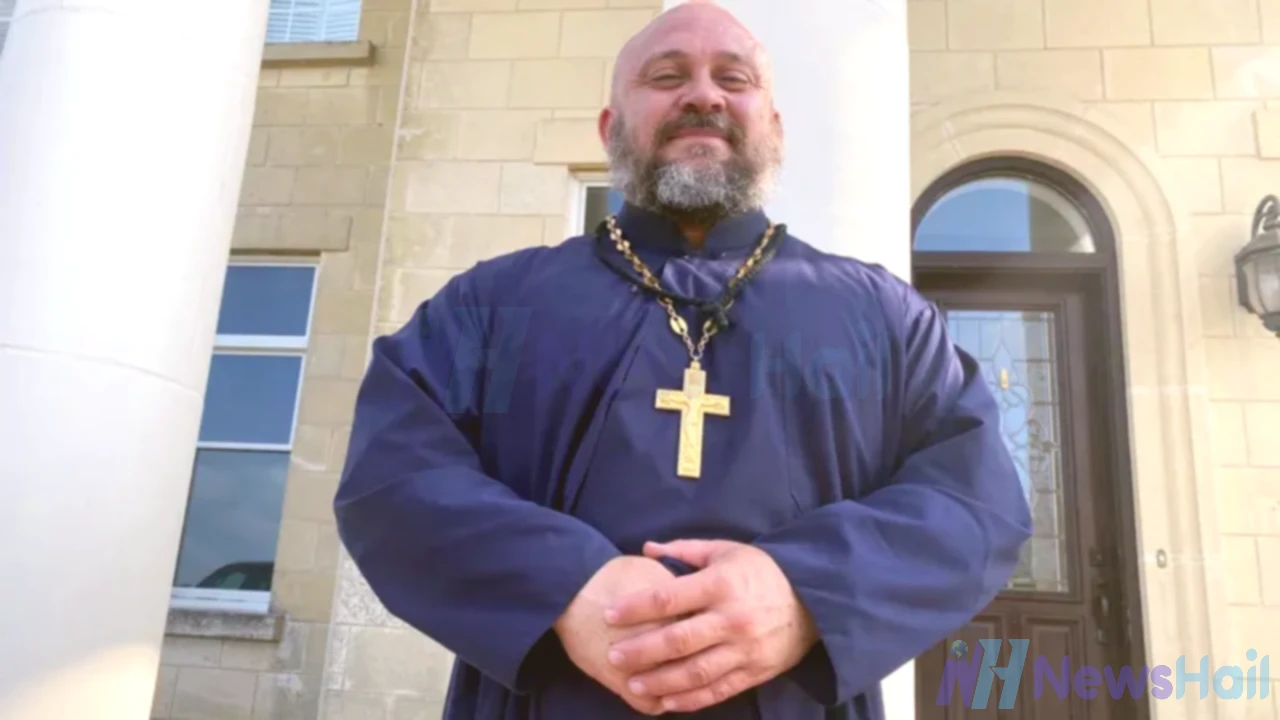
Many people ask me, "Father Moses, how can I be more manly?"
In a YouTube video, a priest talks about being strong and proud as a man.
He says things like skinny jeans, crossing your legs, using an iron, shaping your eyebrows, and eating soup are too feminine.
Father Moses McPherson is a strong father of five. He lifts weights while listening to heavy metal music.
He grew up Protestant and worked as a roofer. Now he is a priest in the Russian Orthodox Church Outside Russia (ROCOR) in Georgetown, Texas. This church is connected to the main church in Moscow.
ROCOR is growing in the US. Many people are joining after leaving other religions.
In six months, Father Moses helped 75 people get ready for baptism at his church near Austin.
He says, "When my wife and I joined 20 years ago, Orthodoxy was a secret. People did not know about it."
"But now, our church has grown three times bigger in the last year and a half."
At Sunday service, many young men in their 20s and 30s pray and cross themselves. This old religion, started in the 4th century, draws men who feel lost in modern America.
Theodore, a software engineer, had a good job and a wife he loved. But he felt empty inside. He says society is tough on men and says they are often wrong.
He is upset that people say men should not want to support a wife who stays home.
"We are told that is a bad way now," Theodore says. "But it should not be."
Most new members teach their children at home. They believe women should focus on family, not work.
Father John Whiteford, a priest in ROCOR near Houston, says home-schooling gives a religious education. It also stops talk about "transgenderism" and many new gender ideas.
Orthodox Christians are few in the US, only about one percent of all people. This includes Eastern Orthodoxy from Russia, Ukraine, Greece, and others, and Oriental Orthodoxy from the Middle East and Africa.
ROCOR was started by priests who fled Russia after the 1917 Revolution. It is one of the most conservative Orthodox groups in the US. Its members are very active and vocal. The group’s growth shows some big political changes, especially after President Trump leaned toward Moscow.
The exact number of new members is hard to know. But a study from Pew Research Center shows Orthodox Christians are 64% men now, up from 46% in 2007.
Another study of 773 converts agrees. Most new members are men. Many say the pandemic made them look for faith. This study is from the Orthodox Church in America (OCA), started by Russian monks in Alaska long ago. OCA has more than 700 churches in the US, Canada, and Mexico.
Professor Scott Kenworthy studies Eastern Orthodox Christianity. He says his church in Cincinnati "is full."
He has gone to that church for 24 years. Numbers were steady until Covid lockdowns. Since then, many new people come, wanting to be baptized.
"This is not only my church," he says. "It is happening in many places."
The internet helps this growth. Father Moses is popular online. When he posts about his sixth child’s pregnancy test, he gets 6,000 likes.
Many other priests have podcasts and videos with many male followers.
Father Moses tells people there are two ways to serve God: become a monk or nun, or get married. Married people should avoid birth control and have many kids.
He says, "Show me one saint who blessed birth control." He also calls masturbation "pathetic and unmanly."
Father Moses says Orthodoxy is "normal," but the West is too "feminized." He thinks some Protestant churches mostly attract women.
"I don’t want services that feel like a Taylor Swift concert," he says. "The music is all emotion — that’s not for men."
Elissa Bjeletich Davis, a former Protestant and now Greek Orthodox, teaches Sunday school and has a podcast. She says many converts are "anti-woke." They often see the Russian Church as strict and very masculine.
"It’s funny," she says. "It’s like old Puritans coming back."
Buck Johnson is a firefighter with tattoos. He was scared to visit his Russian Orthodox Church but found it welcoming. He liked that it stayed open during Covid.
At home, Buck watches TV and says his faith changed his views.
He worries about negative views of Russia in America.
"Boomers lived through the Cold War," Buck says. "They think Russia is bad, but I don’t get why."
The Russian Church leader, Patriarch Kirill, supports the war in Ukraine and calls it a Holy War. Many see him as a warmonger. Father John Whiteford says Kirill’s words are misunderstood.
Pictures of Putin holding candles in church or swimming in icy water at Epiphany show Russia as a strong Christian country to some in the US and elsewhere.
Almost 10 years ago, Father Joseph Gleason, another Texas convert, moved to a small Russian village with his family.
He says, "Russia has no gay marriage or civil unions. You can home-school kids here. I love its Orthodox Christian history."
Some conservatives want to move to Russia. Putin made a visa for people leaving the West last year.
Back in Texas, Buck says converts reject quick pleasure and consumerism.
"We think long term," he says, "about traditions, family, community, and neighbors."
He says Orthodoxy fits well — especially in Texas.