NewsHail
25 May 2025
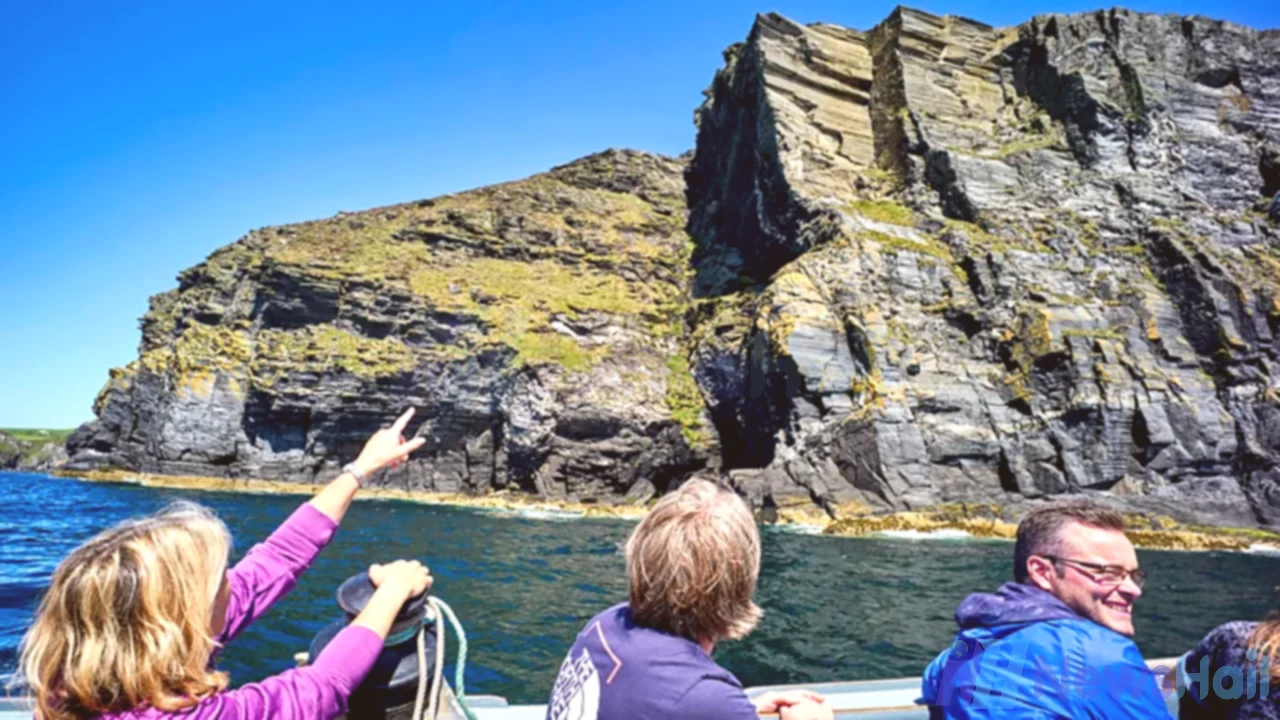
Down at the harbour, it was time to go sailing. Port Saint Mary, near the Isle of Man’s south-west tip, was mostly empty. The only signs of life were seagulls sitting on empty lobster pots. They stared at the boats in the water. Only one boat was moving. Its engine was running, and the smell of diesel was strong. Two men on board set their small motorboat to cross the open sea. Their goal? One of Britain’s most lonely islands. It is surrounded by steep cliffs and wild waters.
The Calf of Man is less than half a mile off the south-west coast of the Meayll Peninsula on the Isle of Man. It is a rare place in the British Isles. It is exciting but hard to reach, no matter the time of year.
The island is mostly home to birds that move with the seasons. One is the black and white Manx shearwater, one of the UK’s longest-living birds. The island has two old lighthouses in ruins. Only two wildlife wardens and two volunteers live there from March to November. In winter, no one stays.
The sea currents around the island are strong. The Calf Sound, the water between the island and the Isle of Man, can be dangerous. Sometimes, storms and tides stop boats from coming for weeks. Many shipwrecks lie just under the water. These include a ship from Liverpool, one from Glasgow, and a French schooner. Visiting the Calf of Man is like a special journey.
Steve Clague was steering the boat that morning. He is a Manx sailor used to bad weather. His father made the same trips to the island for 40 years. Steve said the island makes people dream because it is so hard to get to.
"Last July, we did not sail once," Clague told me. I was one of ten people on the 4.5-hour sightseeing trip. The sea shone blue and silver in the sun. At first, there were no cliffs in sight. "The Calf is a special, beautiful place. It is wild and always changing. You must visit more than once to see it in all its moods. It is like a little time capsule."
Shaun Murphy from Manx National Heritage was also on the boat. His group looks after the Isle of Man’s museums, ancient crosses, and historic sites. Shaun first came to the island as a child in 1970. Now, he visits almost every month. Why does he come back?
"It is a rare good news story," he said, watching gannets dive into the sea. "The guillemot birds are doing well and spreading. The Manx shearwater, once eaten by rats, has come back to about 1,500 pairs. Last year, many seal pups were born. We are trying to help puffins come back. It is a lot to see." Many people work hard on this. For puffins, 100 fake birds made of resin are placed on cliffs to attract real ones.
As we crossed the water, birds flew all around us. Fulmars rode the wind above. I looked at auks, razorbills, and kittiwakes nesting on striped cliffs. Soon, two seals swam near the boat. We slowly reached the island’s small quay, South Harbour.
People lived on the island long ago. Over 1,000 years before we arrived, Christian monks lived there. They built a small chapel called a keeill. During Elizabethan times, some people hid there. Later, farmers, lighthouse keepers, and owners tried to tame the wild island. One owner was Francis Jeffrey Dickens, son of Charles Dickens. He gave the island to the National Trust in 1939. Now, Manx National Heritage owns it.
The island shows many old stories. A rough farm path goes past two early 1800s lighthouses. Chough birds nest in their broken towers. A smithy, silo, and mill stand empty, like ghosts from the past. Stone walls hold sheep. The sheep are a special kind with four horns called Manx Loaghtan.
Most visitors come for the island’s only farmhouse — the Bird Observatory. It is a 30-minute walk from the quay, in a small valley. There, wardens share facts about the unique wildlife. When I arrived, wardens were tagging birds with rings. This helps count and study them. By then, nearly 50 bird species had been tagged.
"If it’s a good bird day, we start at sunrise," said warden Eleanor Grover. "We tag birds until noon and then count them in the afternoon." She told me they saw new birds that day: an osprey, a lesser whitethroat, and a reed warbler.
The work is tough. But it brings good news. Since 1959, over 307,000 birds have been tagged. This data helps track their migration, lifespan, and breeding.
The wardens love birds but sometimes face trouble. "Goldfinches are nice," Grover said, "but blue tits attack you. They are brave for their size." Estate warden Kate Fox watches the Manx shearwater come back. This seabird is brown and clumsy on land. "They are easy to catch but only come at night to stay safe."
Fox checked her watch and then looked at the harbour. My boat was waiting with the engine running. I asked what happens if the boat trip is cancelled. She smiled and said, "There is a wonderful feeling of being alone here. It is magical."
Looking back, I thought the island’s charm was more than nature. It felt like an escape. A world away from busy life. A place that does not care about stories or fake puffins. A place of real magic.