NewsHail
23 May 2025
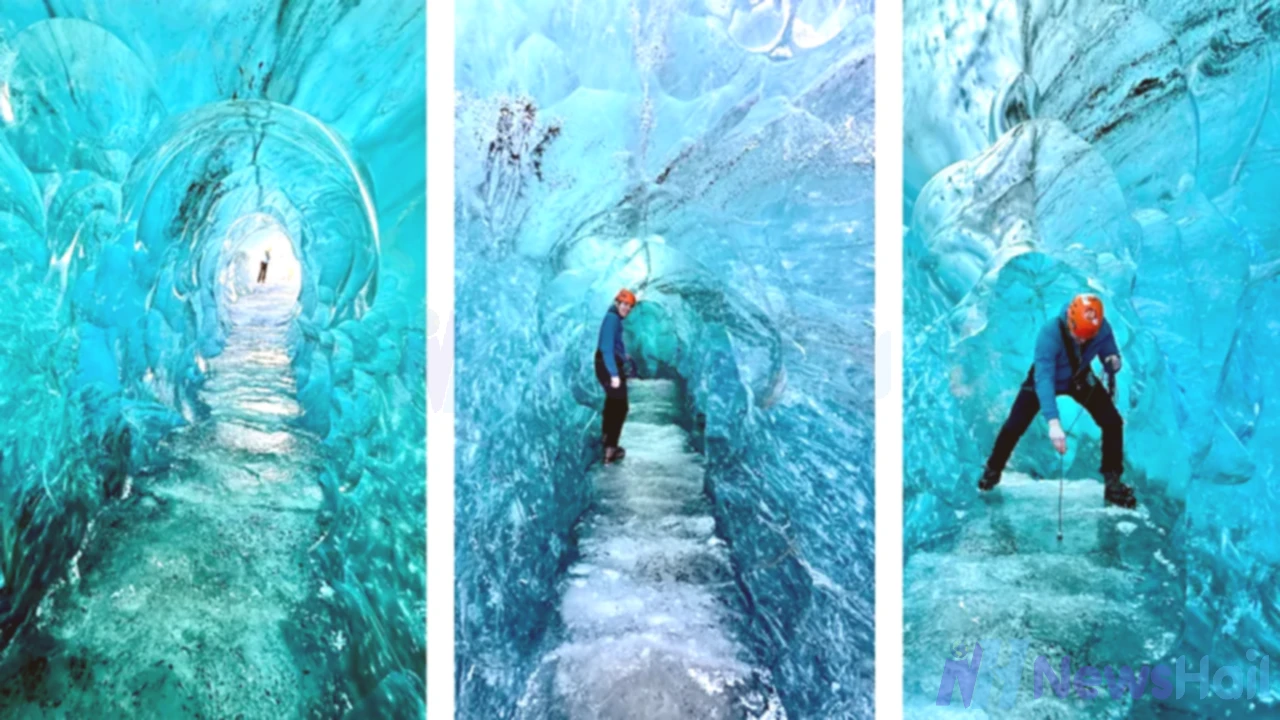
Konstantine Vlasis never thought a song by Sigur Rós would lead him to study Iceland’s melting glaciers. But ten years after hearing their 2013 track Lækurinn ("The Stream"), he found himself on Iceland’s tallest mountains. There, he recorded sounds of melting water and cracking ice for his PhD about the sounds of glaciers.
Climate change is making glaciers melt faster all over the world. In Iceland, glaciers cover 10% of the land but are shrinking quickly. Scientists think Iceland could lose half its glacier ice by 2100. The UN has named 2025 the year to save glaciers.
Vlasis wants sound to help people feel and understand this change.
"Sound can teach us a lot about glaciers," he said. "You can’t see glaciers move in real time, but you can hear them."
Vlasis is a percussionist who works with soundscapes — mixing sounds with places. He uses listening to help talk about climate change. His PhD, supported by New York University and the Leifur Eiríksson Foundation, studies how glacier sounds can show things we can’t see. Every year, over 2.3 million people visit Iceland to see glaciers. Vlasis’s work could help many people, not just scientists.
The song that got him curious is from an album called Rímur, which has old Icelandic folk songs. The song only had the sound of a stream as music. Vlasis thought about the words that talk about getting older and going home. Then he wondered, "What is this stream I hear?" Many streams in Iceland come from glaciers. "What if the stream is not just a symbol but real ice melting into water?" he asked.
His question became a goal: to follow real and symbolic streams — from melting glaciers to old songs. In Iceland, this meant traveling all over, climbing glaciers with microphones to catch sounds, and talking to locals to learn how glaciers shaped their culture. He is collecting sounds and stories that might disappear soon.
Vlasis calls this the "human ecology" of glaciers: how people and glaciers connect. He says nature is not separate from us. "We change and affect it in many ways."
By making glacier sounds louder, he hopes people can hear climate change happening now. "We see melting glaciers as signs of climate change. I wanted to hear what stories their sounds tell and how people listened to glaciers in the past."
How do you listen to a glacier? Every move a glacier makes makes a sound, says Vlasis. Glaciers flow downhill under their weight. You can hear cracks and rumbles when ice shifts. "It has rhythm, speed, and loudness," he said.
Glacial ice has bubbles that keep old air inside. When the ice melts, you can hear bubbles popping and fizzing in the water.
Recording these sounds is hard. Vlasis goes to the ice about once a month to add sounds to his collection. He uses special microphones and sometimes leaves them on the ice for months.
Glaciers also make very low sounds called infrasound that humans can’t hear. Vlasis uses a contact microphone that sticks to the ice and then changes the sounds so we can hear them. "It’s like a stethoscope," he said, "listening to the health of the land."
His other research looks at Iceland’s rímur — old songs or poems passed down through families. These songs talk about weather, floods, and disasters. By studying the words, Vlasis finds "environmental archives" — old stories about how people saw glaciers. These songs help us learn about changes when no written records exist.
He works with scientists who predict how Iceland’s glaciers will shrink over the next 100 years. Together, they made a performance called 2124, which turns this data into sound. A drummer plays on the Breiðamerkurjökull glacier. The drum beats show one year in time and get faster to show how fast glaciers will change. The music is both beautiful and sad: a forecast of a world without glaciers.
"When the glacier melts, you hear the meltwater streams get louder until you feel inside the ice cave," Vlasis said. "Then the sound quickly takes you back to the surface."
Vlasis won the 2024 Fulbright-National Geographic Award to support his next project: When Glaciers Sing. This audio story will mix field sounds, old songs, and data sounds. It will be online by spring 2026.
He hopes his work shows how urgent climate change is and that his glacier sounds help people care about melting ice. "Songs and music can help us witness what is happening. Music can give meaning and teach us about the past."
He talked about an Icelandic lullaby called Sofðu Unga Ástin Mín (Sleep, My Young Love) with the line: "In the glacier cracks scream as deep as death."
"When it was written in 1911, glaciers seemed scary and dangerous to many Icelanders. Now, the meaning changes as glaciers vanish fast. Will there come a time when we talk about glaciers but our children don’t know what they are?"
Though travel can harm the climate, Vlasis thinks responsible tourism matters. "Every choice has an environmental cost. But if you visit a glacier, you can learn what it is and what is happening. At least, we should respect that place."
Most of Iceland’s outlet glaciers may stop being glaciers in 200 years, says Vlasis.
"If we want a world without ice, we can keep living how we do now. But glaciers can teach us to listen. To listen well, we must let go of our own views and be open to new things."
He adds, "I’m learning to listen better, and glaciers help me do that."
And it all started with the trickle of one stream.