NewsHail
23 May 2025
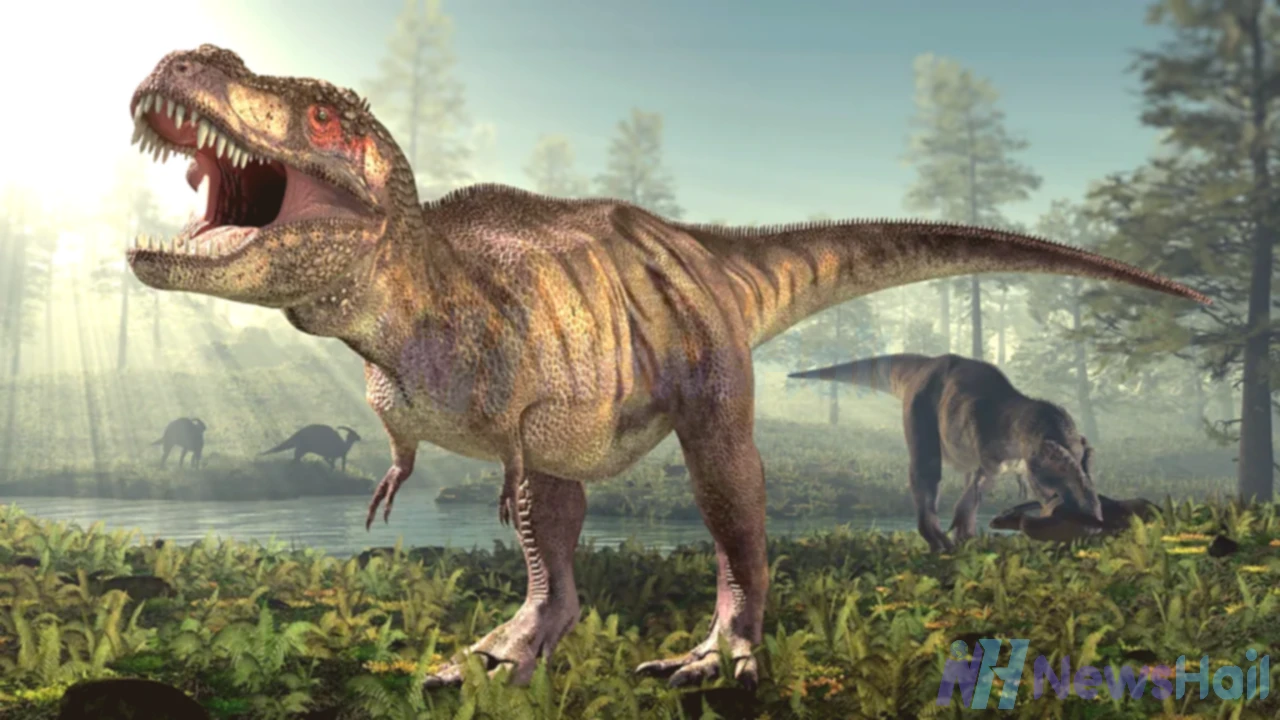
You wouldn’t hear it so much as feel it. A deep rumble would shake your chest and raise the hairs on your neck. It came from deep inside the forests of the Cretaceous period. It would have been very scary.
We don’t have many clues about what dinosaurs sounded like. Fossils show us their shapes and sizes. But sound does not turn into fossils. So we don't know for sure how they communicated.
But scientists think dinosaurs were not silent.
Now, thanks to better tools and rare fossils, experts are starting to guess what they may have sounded like.
There is no one answer. Dinosaurs lived for about 179 million years. They came in many sizes and shapes. Some were small, like Albinykus, which was only 2 feet long and weighed less than 1 kilogram. Others, like Patagotitan mayorum, weighed as much as 72 tonnes.
Dinosaurs moved on two or four legs. And just like their bodies, their sounds likely varied a lot.
Some had very long necks. This would have changed the way their sounds traveled—like stretching a trombone. Others had odd skull shapes that could work like wind instruments. One example is a plant-eating dinosaur called Parasaurolophus tubicen.
This dinosaur had a large crest on its head. It was almost a meter long. Inside the crest were hollow tubes connected to the nose and throat. The tubes made a long sound chamber—about 2.9 meters (9.5 feet) long.
In 1995, scientists found a nearly full skull of this animal in New Mexico. They used CT scans to look inside the crest. Then they used computers to guess how it might have sounded when air passed through.
“It sounded very strange,” said Tom Williamson, one of the scientists. “It gave me chills.”
He said the sounds were like those made by the cassowary, a large bird in Australia. Cassowaries make deep, shaking sounds that echo in the jungle.
These dinosaur sounds were also low and deep. They could pass through thick plants and trees.
Even without a voice box, the Parasaurolophus could still make sounds. Air blowing through the crest was enough to create noise, like blowing over a jug.
Other dinosaurs had smaller crests. These may have helped with both making sounds and showing off. Most of their calls were likely deep and low.
Some people have even built musical instruments based on these skull shapes!
But not all dinosaurs had such built-in trumpets. And no one has found a true voice box (like ours) in most fossils. That has led some to wonder if some dinosaurs were silent.
But that changed when scientists found a bird-like fossil in Antarctica. The fossil was from a goose-like animal called Vegavis iaai. It lived 66–68 million years ago, during the time of the dinosaurs.
Using CT scans, scientists saw tiny rings from a syrinx, the sound organ in birds. This was big news. It showed that these organs can turn into fossils. Their absence in other fossils means many dinosaurs may not have had one.
Only one fossil of a voice box from a non-bird dinosaur has ever been found. It belonged to Pinacosaurus grangeri, an armored dinosaur with a club tail. It lived around 80 million years ago.
In 2023, scientists studied the voice box. It may have helped the animal make loud, bird-like sounds—like parrots do.
Julia Clarke, a top expert on dino sounds, says most dinosaurs likely didn’t roar like lions. Instead, they probably cooed or boomed, like doves or ostriches.
Some may have made sounds with their mouths closed, by puffing up their throats—just like crocodiles do today. Crocodiles make deep bellows without opening their mouths. These sounds can even make water move around them.
The Jurassic Park movies got this wrong, says Clarke. They used big, scary roars. But real predators don’t roar before attacking—they stay quiet to sneak up on prey.
Dinosaurs likely made soft or deep sounds for mating or showing off. But they may have used loud calls during stress or danger.
We know more about dinosaur hearing. Fossils show the bones used in their ears. They had just one middle ear bone called the stapes, while humans have three.
Tyrannosaurus rex had a large stapes, meaning it could hear low sounds well. Smaller dinosaurs had smaller stapes and may have heard higher sounds.
Some had long inner ear parts, which help with hearing many sound types. This includes a species called Timurlengia euotica, a mid-sized predator. It had long ear parts, meaning it could hear a wide range of sounds.
Hearing well helped dinosaurs in many ways. It helped them talk to each other, find food, or avoid danger.
Babies may have even chirped like baby birds and crocodiles do today. Their parents may have cared for them by listening for these sounds.
Big dinosaurs, like Supersaurus, may have made very low sounds—infrasound. Humans can’t hear these sounds, but we can feel them. Elephants and rhinos use infrasound to talk across long distances.
Because big dinosaurs had long necks, their brain signals took longer to reach their voices. Their sounds may have been slow or delayed.
Some scientists think these giants used their tails to stay in touch with their herd. Long tails may have helped them "talk" by touch.
It's fun to imagine a world full of dinosaur sounds—chirps, coos, rumbles, and more. If you were there, would you stop to listen? Or run away?